
How physical objects train your creative eye better than any screen
What if Pinterest is making your work less original?

The most original designers I know don’t use Pinterest. They collect and archive finds from op-shops, estate sales, their grandmother’s cupboards.
Whenever I watch Architectural Digest videos, I’m there for the moment someone picks up a random object and explains why it matters. “This plate belonged to my grandma when she immigrated here” or “I bought this poster at a flea market in Spain.”
It always sounds chic. But I recognise what they’re actually revealing - these objects are their creative infrastructure. The foundation of how they see.
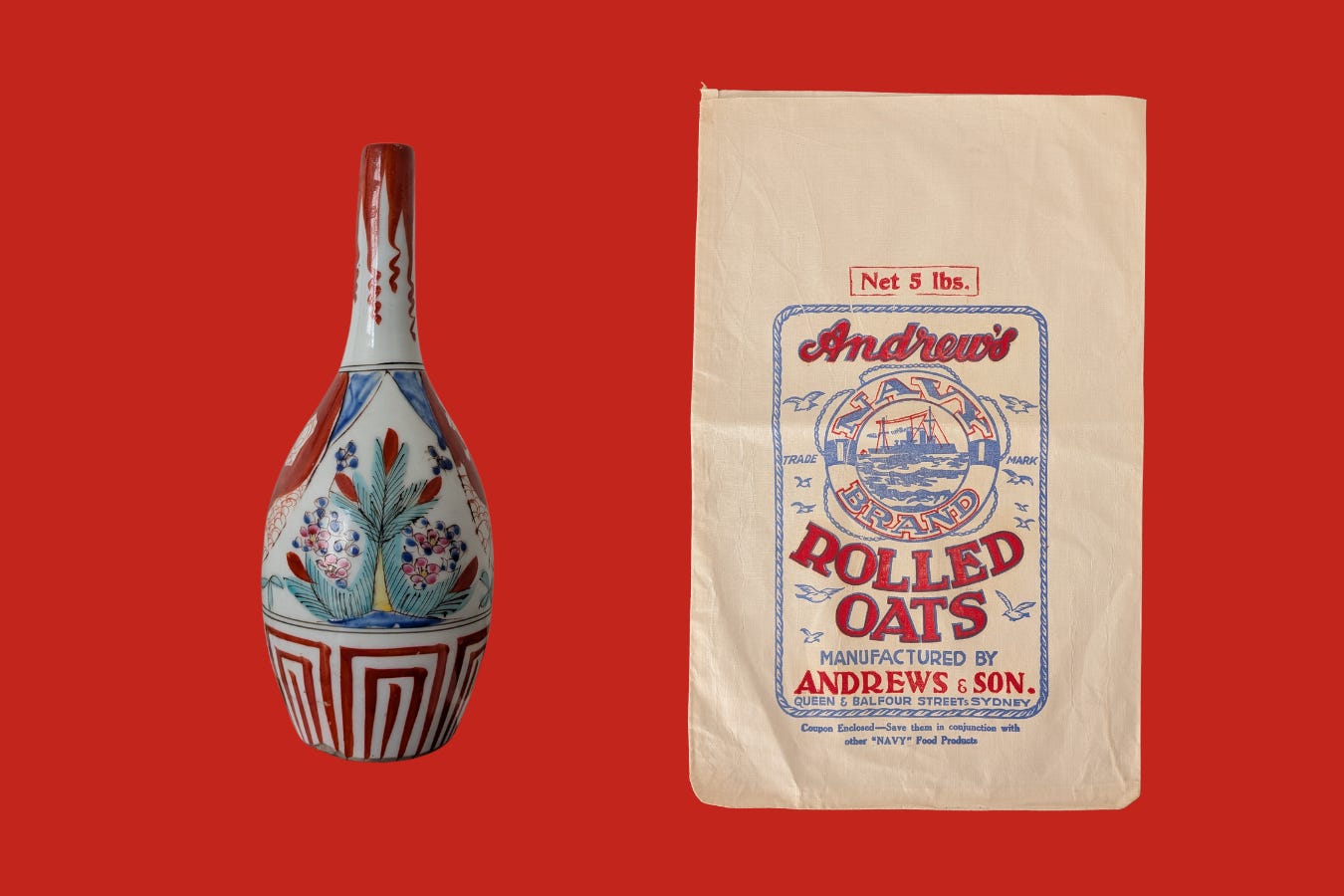
I grew up watching two approaches to “things”. My grandmother, who lived through WWII, kept nothing without practical use. My mother, the opposite - preserving a hand-painted ceramic plate and my childhood library. “Beauty that can’t be reproduced today.” Between them, they taught me - curation is a choice about what matters.
When I became a designer, those objects evolved into something else entirely: my creative education. I started noticing how physical artefacts worked on me differently than digital inspiration - colour palettes and textures I couldn’t articulate but felt, layouts that became intuitive through frequent exposure.
My work was in conversation with my archive - whether I intended it or not.
Whether it’s how much I loved Sofia Coppola’s Archive - a book where she shares the vintage photographs, magazine clippings, and film stills that influenced her work - or all the above, I decided to make it intentional. I started building what I call my “future archive” - not just things I loved in the moment, but things that would still be teaching me something in 30, 50 years. Objects with enough complexity that they’d reveal something new every time I looked at them.
What I’m learning is that physical archives don’t just preserve inspiration - they actively build creative intelligence, which I think matters more than ever.
Here’s why:
Physical objects train your eye differently than screens
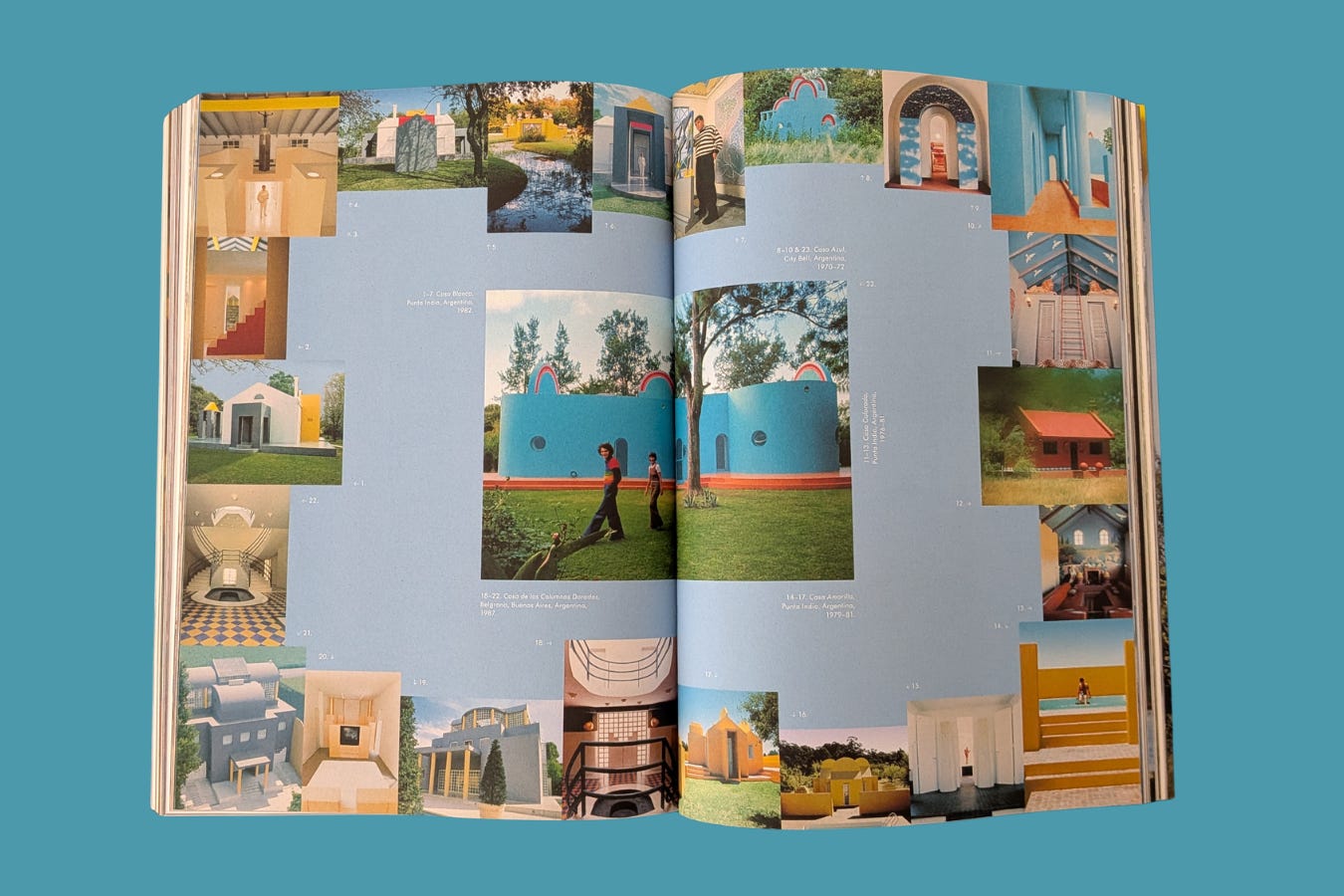
There’s an ephemerality to online resources, we all experience it - links break, accounts disappear, platforms change. But that 1980s French design book I found for $4 in an op-shop? It’ll still be teaching me about typography, layout, paper quality in 50 years.
It’s not just about permanence - it’s about how physical objects work on our brain. You notice details screens don’t reveal: how colour shifts in different light, how texture affects perception, the actual scale of the design. This is tactile intelligence that digital inspiration can’t build and to be completely honest I think my physical finds have influenced my work far more than anything I’ve seen online.
I’m not anti-digital and I’m not suggesting you fill your home with clutter. By all means, digitise your inspiration - photograph your finds, scan book pages, build a digital reference library.
But the curation has to happen physically.
You can’t develop an eye by only scrolling through images online. The judgment call - Is this worth keeping? Will this continue to inspire me? - happens IRL.
Digital storage is practical. Physical curation is what builds your eye.
Why this matters for your work
Here’s what’s changed for me since building my archive:
I spot patterns faster. Every object you keep is a vote for “this matters to my creative POV.” Try this: Look at three objects in your space right now that you find inspiring. What creative question does each one answer?
For me: That 1980s French interior design book shows me “Where is the sweet spot between timeless and futuristic when it comes to design?” The tiny Japanese vase shows me “How can the colour red feel gentle and ephemeral?” The Andrew’s Rolled Oats bag shows me “What does balanced layout look like?”
These objects I picked up and decided to keep are my creative filters. When I’m working, these questions are subconsciously running in the background.
I make decisions with more confidence. Leading design teams through AI adoption made this clear - when tools can generate anything, context becomes everything. Your archive IS your context. It’s not just proof of your taste - it’s a map of your creative decision-making.
I see what’s coming before it peaks. Understanding historical context - design movements, cultural moments, forgotten aesthetics, craft techniques - helps me identify how they might resurface or be reinterpreted. Every trend I’ve accurately spotted came from recognising a pattern I’d seen in my archive.
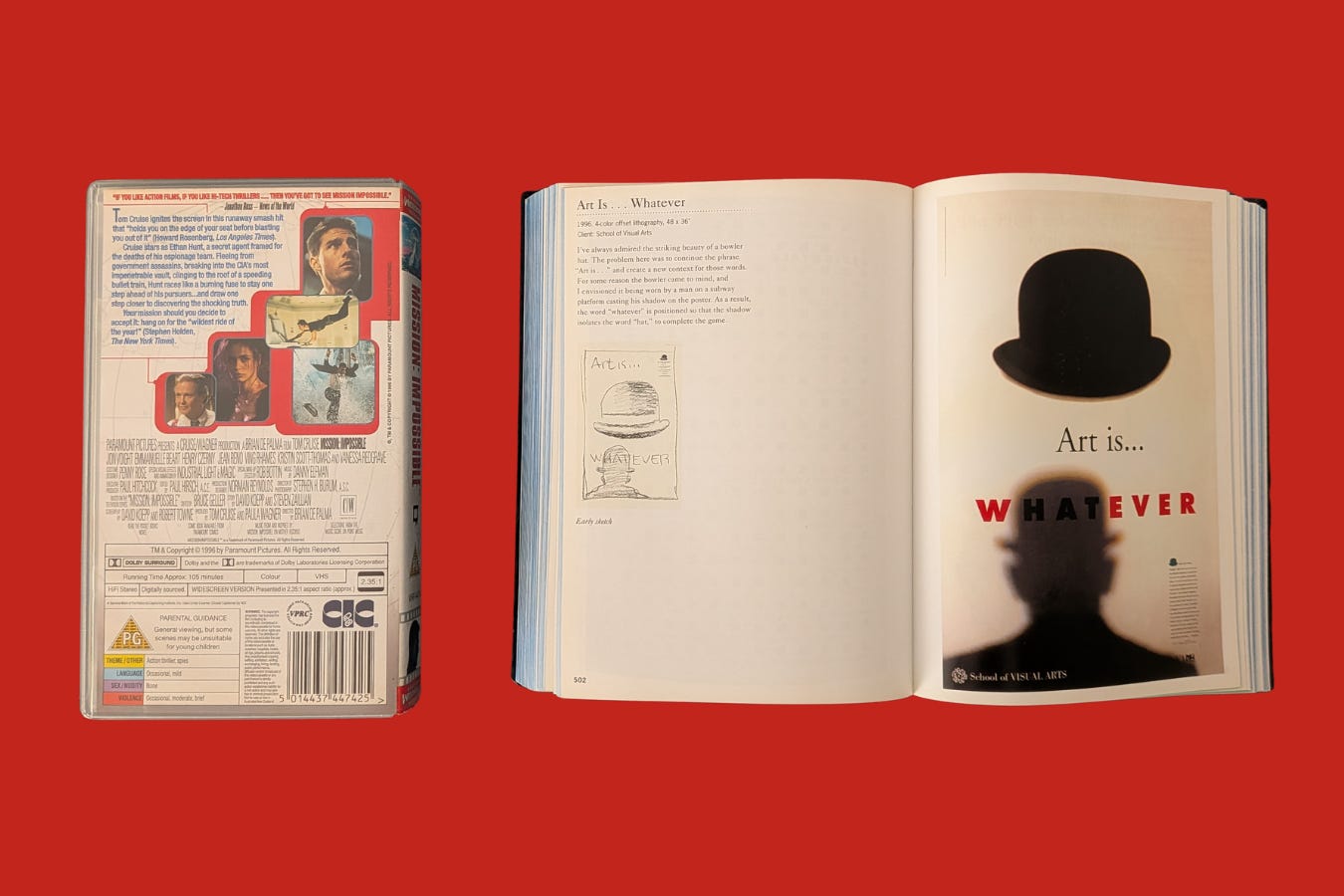
You start noticing cycles. Not exact repetitions, but reinterpretations under new conditions. Lithograph printing worked within massive constraints: limited colour printing, long set up, limited space for complex design. Those limitations created a specific aesthetic - high contrast, bold shapes, clever use of negative space. That aesthetic has come back now, but for different reasons - as a reaction against the infinite options of digital design. Constraints feel refreshing again.
Your physical archive is different from everyone else’s because you’re hunting in different places, making different choices, living with different influences. That flea market find, that op-shop book, your grandmother’s plate - these are gaps in the algorithmic record. Owning them gives you access to creative lineages others don’t have.
Physical archives let you see creative evolution in ways the internet can’t show you - because the internet only preserves what is popular, not what is interesting.
The internet archives Bauhaus because it’s famous. But what about the dozens of regional design movements that were just as innovative but never became mainstream? Italian modernists in the 1920s. Japanese packaging from the 1960s. Soviet poster design from the 1970s. The weird, experimental work that never became iconic but paved the way for everything that did.

Your flea market and op-shop finds - these are the gaps in the digital record. The experiments. The regional variations.
And that’s where the next trends come from. Not from what everyone remembers, but from what almost everyone forgot.
What I’m archiving now
Growing up and looking through black and white photos of the family members that I never got to meet, what I found the most interesting in these photos were the mundane moments. Conversation in the kitchen, family on the way somewhere in the car, corners of our home. These moments are doorways to the yesteryear. What the life was like, what was my uncle wearing, what these conversations might have been about? Evidence of taste I inherited without knowing it.
Which is why I’ve started carrying my cheap film camera everywhere - for moments I wouldn’t instinctively pull out my phone for. I’ve also started taking pictures of our home, it’s a rental and in 30 years it will probably be a distant memory.
These archives preserve more than moments - they preserve my creative logic. What I notice. What I value. How I see.
It feels like making cave drawings. I think I’m starting to understand why our ancestors felt compelled to leave marks - the act of recording is the act of deciding what matters.
Use your archive this week
If you’re thinking “this sounds great but where do I start,” here’s your entry point:
Next time you’re working on a project, try this:
Before you open Pinterest or search Google, look at three physical objects in your space. Ask: “What design principle is each one showing me?”
That vintage book cover - How does it balance type and image?
That museum ticket - What makes the typography feel premium?
That fabric sample - How does texture change perception of quality?
You’re not copying these objects. You’re using them as creative filters—asking questions before you start searching for answers online.
The shift: Instead of “I need inspiration for a clean layout” - scroll Pinterest for 30 minutes, try: “This 1980s French design book shows me how white space creates breathing room” - apply that principle to your work in 5 minutes.
Your archive becomes a tool, not just a collection.
What I’m curious about: What’s one object in your space right now that you keep coming back to? What creative question is it answering for you? Reply and let me know - I read every message.
Thank you for reading til the end, this means the world to me !
M x
I feel this! The danger of "Pinterest image collecting" is we don't get any context on artists/designers/architects thinking behind the work as we would in a book or an article
Pinterest is great to "organise references" but unfortunately many use it as a research resource
"Curate every aspect of your life until you've built yourself a heaven."